
Unlock marketing success with effective website design
- Adeline Taylor
- 2 days ago
- 9 min read

Many small business owners in Kent view their website as a digital brochure, a static presence that simply exists online. This misconception costs them dearly. Your website is not just a virtual shopfront; it’s your most powerful marketing tool, working around the clock to attract, engage, and convert customers.
When designed strategically, it becomes the engine driving your visibility in local search results, building trust with prospects, and converting visitors into loyal customers. This article reveals how effective website design transforms marketing outcomes for small to medium businesses, offering actionable insights to enhance your online presence and accelerate growth in 2026.
Table of Contents
Key takeaways
Point | Details |
Mobile optimisation drives conversions | A mobile-friendly website increases conversions by 20% and captures the majority of web traffic. |
Local SEO integration boosts visibility | Embedding local SEO elements in design can drive 50% more customers to your Kent business. |
Strong branding builds customer trust | Consistent visual identity through design leads to 71% more purchases from trusted brands. |
User experience reduces bounce rates | Fast loading times and intuitive navigation keep visitors engaged and exploring your site longer. |
Data-driven redesigns deliver results | Strategic website redesigns can increase conversion rates by 150% within three months. |
Why website design matters for your marketing success
Website design sits at the intersection of aesthetics and functionality, but its true value lies in how it amplifies your marketing efforts. A well-crafted site enhances visibility through search engines, engages visitors with intuitive navigation, and converts browsers into buyers through strategic layout and messaging. For small to medium businesses in Kent, this translates directly to competitive advantage in local markets.
Mobile-friendliness stands as a non-negotiable marketing asset. With mobile users accounting for over 60% of web traffic, businesses must prioritise responsive design. Google’s mobile-first indexing means your site’s mobile version determines search rankings. Companies with mobile-friendly websites experience a 20% increase in mobile conversions, proving that accessibility across devices directly impacts revenue.
Branding consistency through design builds the trust essential for sales growth. Visual elements like colour schemes, typography, and imagery create immediate recognition and emotional connection. Research shows 71% of people make more purchases from brands they trust. When your website presents a cohesive, professional image, it signals reliability and competence to potential customers.
User experience directly influences marketing effectiveness. Sites with confusing navigation or slow loading times frustrate visitors, leading to immediate exits. Good design reduces bounce rates by creating clear pathways to information and calls-to-action. When visitors stay longer and explore multiple pages, they develop familiarity with your offerings and move closer to conversion.
“Your website is the foundation of your digital marketing strategy. Every campaign, every social media post, every email newsletter should drive traffic back to a site that converts.”
Understanding why SEO is important for small businesses helps contextualise how design choices affect search visibility. Elements like site structure, page speed, and mobile responsiveness all contribute to search engine rankings. When design and SEO work together, your marketing reach expands organically.
Key marketing benefits of strategic website design include:
Enhanced search engine visibility through technical optimisation
Improved user engagement via intuitive navigation and compelling visuals
Higher conversion rates through strategic placement of calls-to-action
Stronger brand recognition across all customer touchpoints
Better customer retention through consistent, professional presentation
Key elements of effective website design for small businesses
Mobile responsiveness forms the cornerstone of modern website design. Your site must adapt seamlessly to smartphones, tablets, and desktop screens, maintaining functionality and visual appeal across all devices. This isn’t merely about shrinking content to fit smaller screens; it requires thoughtful restructuring of layouts, touch-friendly navigation, and optimised images that load quickly on mobile networks.

Integrating SEO into design from the ground up ensures your site ranks well in search results. This means clean code, logical site architecture, descriptive URLs, and optimised images with proper alt text. Page speed matters enormously, both for user experience and search rankings. Compress images, minimise code, and leverage browser caching to keep loading times under three seconds.
Local SEO elements prove particularly vital for Kent businesses targeting nearby customers. Embedding local keywords naturally throughout your content, claiming and optimising your Google Business Profile, and ensuring consistent NAP (name, address, phone) information across all platforms dramatically improves local search visibility. Studies indicate local SEO can drive 50% more customers to a business, making it essential for small enterprises competing in geographic markets.
Clear navigation and fast loading times enhance user experience and marketing effectiveness. Visitors should find what they need within three clicks. Organise content logically, use descriptive menu labels, and include a search function for larger sites. Every second of delay in page loading increases bounce rates, so prioritise performance optimisation.
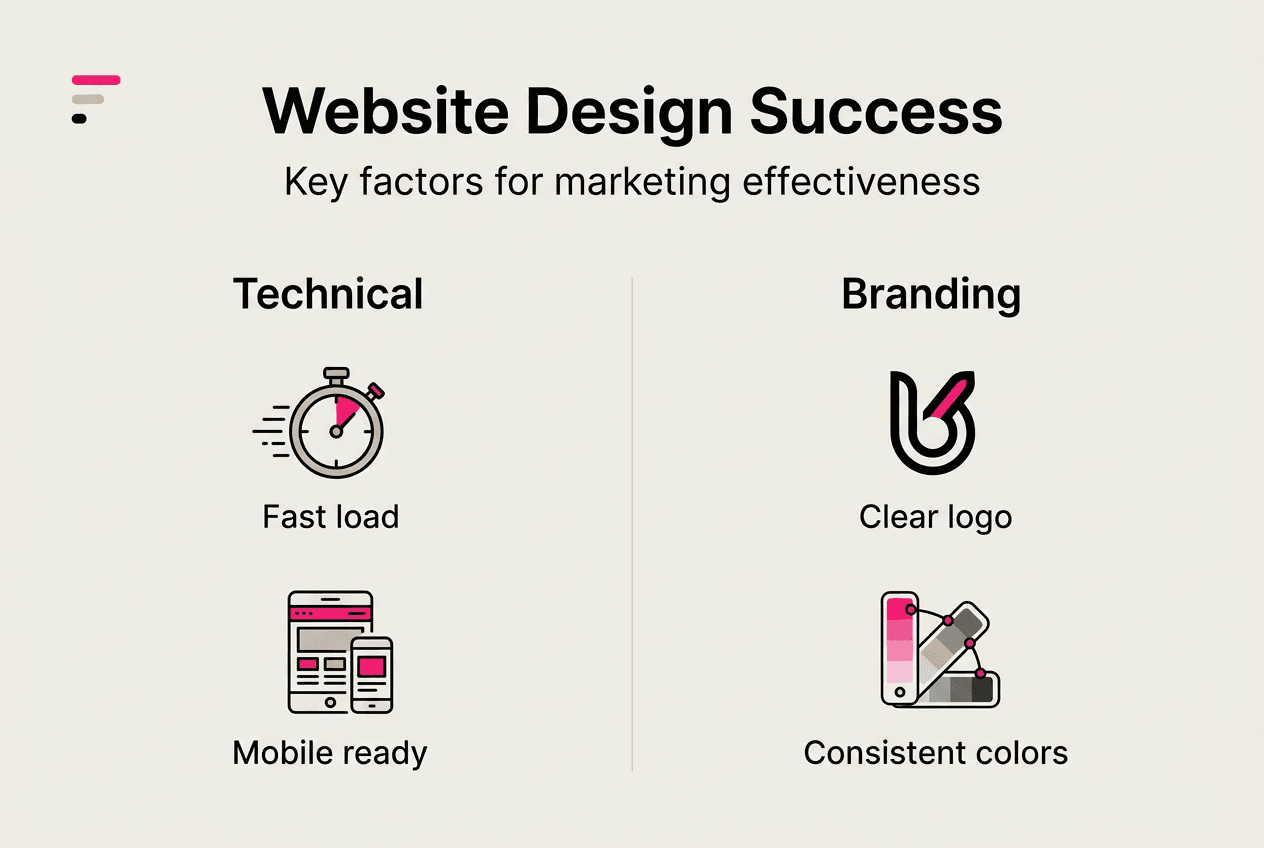
Consistent branding elements create trust and drive higher conversion rates. Your logo, colour palette, typography, and imagery should align with your brand identity and appear consistently across every page. This visual coherence reinforces professionalism and helps customers remember your business.
Pro Tip: Test your website on multiple devices and browsers before launch. What looks perfect on your desktop might display poorly on an iPhone or Android tablet. Use tools like Google’s Mobile-Friendly Test to identify issues.
Design Element | Poor Implementation | Strong Implementation |
Mobile responsiveness | Fixed-width layout, tiny text, difficult navigation | Fluid grid, readable fonts, touch-optimised buttons |
Loading speed | Multiple large images, uncompressed files, excessive plugins | Optimised images, minified code, efficient hosting |
Navigation | Unclear labels, hidden menus, inconsistent structure | Descriptive labels, visible menus, logical hierarchy |
Branding | Inconsistent colours, multiple fonts, generic imagery | Cohesive palette, limited font families, branded visuals |
SEO integration | Missing meta tags, poor URL structure, no alt text | Optimised meta data, clean URLs, descriptive alt text |
Exploring local SEO in Kent reveals specific strategies for dominating local search results. Combining these tactics with strong website design creates a powerful marketing foundation. Additionally, leveraging best free SEO tools helps you monitor performance and identify improvement opportunities without significant investment.
How a website redesign can boost your local marketing results
Redesigning your website can dramatically transform marketing outcomes. Businesses often operate with outdated sites that fail to meet current user expectations or search engine requirements. A strategic redesign addresses these gaps, resulting in measurable improvements across key metrics.
Conversion rate increases represent the most compelling redesign benefit. Case studies demonstrate that website redesign can increase conversion rates by 150% within three months. These gains stem from improved user experience, clearer calls-to-action, and better alignment between visitor intent and site content. When visitors find what they need quickly and navigate effortlessly, they convert at higher rates.
Lower bounce rates indicate visitors find your content relevant and engaging. A redesign that improves page speed, enhances visual appeal, and clarifies navigation keeps people on your site longer. Longer visit duration signals to search engines that your content satisfies user intent, potentially boosting rankings.
Data-driven redesigns deliver superior results compared to aesthetic-only updates. Start by analysing current performance through Google Analytics, identifying pages with high exit rates, slow loading times, or poor conversion. Use heat mapping tools to understand how visitors interact with your site. A/B testing different layouts, headlines, and calls-to-action reveals what resonates with your audience.
Key redesign focus areas include SEO optimisation, mobile-first design, improved user experience, and brand clarity. Address technical SEO issues like broken links, duplicate content, and missing meta descriptions. Ensure your site works flawlessly on mobile devices. Simplify navigation and reduce friction in the conversion process. Strengthen brand consistency across all pages.
Metric | Before Redesign | After Redesign | Improvement |
Conversion rate | 2.1% | 5.3% | 152% increase |
Bounce rate | 68% | 41% | 40% decrease |
Average time on site | 1:23 | 2:13 | 60% increase |
Mobile traffic share | 52% | 67% | 29% increase |
Organic search traffic | 1,240/month | 2,180/month | 76% increase |
Pro Tip: Schedule redesigns during slower business periods to minimise disruption. Maintain redirects from old URLs to new ones to preserve search rankings and avoid broken links.
Understanding the effectiveness of SEO for small businesses helps contextualise why redesigns that prioritise search optimisation deliver such strong results. When you combine improved design with robust SEO practices, your site becomes a powerful customer acquisition tool.
Monitor analytics closely following a redesign to track improvements and identify any unexpected issues. Watch for changes in traffic sources, user behaviour, and conversion patterns. This data informs ongoing optimisation efforts, ensuring your site continues delivering strong marketing results.
Practical steps to optimise your website design for marketing in Kent
Improving your website’s marketing effectiveness starts with a comprehensive audit. Examine every aspect of your current site, from technical performance to content quality. Identify pages with high bounce rates, slow loading times, or poor conversion rates. Check for broken links, missing alt text, and outdated content. This diagnostic phase reveals specific areas needing attention.
Implementing mobile-first, responsive design ensures your site serves the majority of users effectively. Begin with mobile layouts, then scale up to tablet and desktop versions. This approach prioritises the most common user experience and prevents the awkward compromises that occur when shrinking desktop designs to fit mobile screens.
Optimising SEO elements throughout your site improves search visibility and attracts qualified traffic. Follow these steps:
Research relevant keywords for your Kent business and target audience
Incorporate keywords naturally into page titles, headings, and body content
Write compelling meta descriptions that encourage clicks from search results
Optimise images with descriptive file names and alt text
Create or claim your Google Business Profile and keep information current
Build citations in local directories with consistent NAP information
Develop location-specific content that addresses local customer needs
Creating clear, fast-loading, and easy-to-navigate pages enhances user experience. Organise content logically with descriptive headings. Use white space effectively to prevent overwhelming visitors. Limit choices on each page to guide users toward desired actions. Compress images and leverage browser caching to improve loading speed.
Regular content updates and analytics monitoring sustain marketing effectiveness over time. Search engines favour sites that publish fresh, relevant content regularly. Blog posts, case studies, and updated service descriptions signal active engagement with your audience. Monitor traffic patterns, conversion rates, and user behaviour through analytics platforms. This data reveals what works and what needs adjustment.
Key optimisation tactics include:
Implementing schema markup to enhance search result displays
Adding customer testimonials and reviews to build trust
Creating clear calls-to-action on every page
Developing landing pages tailored to specific marketing campaigns
Ensuring contact information appears prominently and consistently
Installing SSL certificates for security and search ranking benefits
Businesses with optimised Google Business Profiles are 70% more likely to be visited by customers, highlighting the importance of local listing management. Combine this with strong website design for maximum impact.
Understanding why SEO is important for small businesses reinforces the value of these optimisation efforts. Additionally, exploring local SEO tips provides deeper insights into strategies specific to Kent markets.
Pro Tip: Set up Google Search Console and submit your sitemap. This free tool reveals how Google views your site, identifies indexing issues, and shows which search queries drive traffic.
Discover expert website design and marketing services
Transforming your website into a high-performing marketing asset requires expertise, time, and ongoing attention. Professional services accelerate this process, delivering results faster than DIY approaches. Specialists understand current best practices, emerging trends, and the technical nuances that separate adequate sites from exceptional ones.
Expert web design in Kent tailored for small to medium businesses combines aesthetic appeal with marketing effectiveness. Designers who understand your local market create sites that resonate with Kent customers while meeting search engine requirements. They build responsive, fast-loading sites optimised for conversions.
SEO marketing services in Kent integrate seamlessly with website design, ensuring your site ranks well in local search results and attracts qualified traffic. These services address both technical optimisation and content strategy, creating comprehensive approaches to online visibility. A free website audit identifies specific design and marketing weaknesses, providing a roadmap for targeted improvements. This diagnostic service reveals opportunities you might miss and prioritises fixes based on potential impact.
FAQ
What is the role of website design in marketing?
Website design shapes how customers perceive your business and directly influences engagement, conversions, and brand trust. Effective design integrates usability, visual appeal, and SEO to maximise online visibility. It creates intuitive pathways that guide visitors toward desired actions, whether purchasing products, booking services, or requesting quotes. Strong design also reinforces brand identity across all customer touchpoints, building recognition and loyalty.
How important is mobile responsiveness for small business websites?
Mobile responsiveness is absolutely essential, as over 60% of website traffic comes from mobile devices. Google prioritises mobile-friendly sites in search rankings, meaning poor mobile performance directly reduces visibility. Visitors who encounter difficult-to-use mobile sites leave immediately, increasing bounce rates and reducing conversion opportunities. Responsive design ensures your site works flawlessly regardless of device, capturing the maximum possible audience.
What are the benefits of integrating local SEO into website design?
Local SEO integration helps your website rank higher in geographically relevant searches, attracting customers in Kent and surrounding areas. Features like local keywords, location pages, and Google Business Profile connections increase the likelihood of appearing in local search results and map listings. Research shows businesses with optimised Google Business Profiles are 70% more likely to be visited by customers. This targeted visibility delivers highly qualified traffic more likely to convert than generic web visitors.
How can a website redesign improve my business marketing results?
Redesigns improve user experience and SEO simultaneously, leading to higher conversion rates and better customer retention. Strategic updates address technical issues, modernise visual presentation, and align site structure with current search engine requirements. Case studies demonstrate redesigns can increase conversion rates by 150%, reduce bounce rates by 40%, and increase time on site by 60%. These improvements translate directly to more leads, sales, and revenue from your online presence.
Recommended
Comments