
How to Raise Awareness for Nonprofit Organisations

Updated: Mar 29
Nonprofits do the kind of work that holds communities together. You’re tackling big issues like health, education, poverty, the environment, and human rights, often with limited time and even tighter budgets. That’s why awareness marketing matters. If people don’t know you exist, they can’t donate, volunteer, share your message, or partner with you.
In this guide, we’ll look at how to use storytelling, social media, events, partnerships, and content to grow awareness in a way that feels human, not salesy.

Start with storytelling people actually want to hear
If your marketing feels like “please support us”, people scroll past. If it feels like “here’s a real person, here’s what changed, and here’s how you can help”, people lean in. A strong nonprofit story usually has three parts. First, the “before”, which shows the challenge or stakes. Next, the turning point, which is where your organisation’s support enters the picture. Finally, the “after”, which shows progress, hope, or measurable change.
One simple shift that makes this instantly more powerful is to make the beneficiary the hero, not the organisation. You’re the guide in the background, helping them move from struggle to progress. That structure is exactly why many nonprofits love the StoryBrand framework (the book is Building a StoryBrand by Donald Miller). It keeps the message clear and stops your story from becoming vague or overly “corporate”.
To make storytelling even more memorable, bring it to life with faces and real moments. Show volunteers in action, a behind-the-scenes look at your day-to-day, or a short quote from someone you’ve supported. Trust grows faster when people can see the humans behind the mission.
Use social media like a conversation, not a noticeboard
Social media isn’t just a place to broadcast. It’s where people decide if they trust you enough to follow, share, donate, or join in. The goal isn’t to post more. It’s to post with a purpose.
A simple approach is to rotate between content that builds connection and content that drives action. Connection looks like stories, behind-the-scenes clips, volunteer spotlights, and “a day in the life” content. Action looks like donation pushes, event promotion, urgent appeals, and sign-up links.
If you want more reach without more budget, invite your supporters to create content with you. People love being part of something. Ask them to share why they support your cause, what your charity means to them, or a photo from an event. Then reshare it with a quick thank you. That kind of user-generated content often outperforms polished graphics because it feels real.
Hashtags can help with discovery, but they work best when paired with consistent themes and strong hooks. If you’re considering influencers, think “aligned audiences” rather than “big audiences”. A local creator, a community leader, or a respected professional in your space can be far more effective than someone with a huge but disconnected following.
One practical tip that’s often missed: make the next step ridiculously easy. If someone is moved by a story, don’t make them hunt for the donation link. Keep it visible, repeat it naturally, and make sure the landing page is simple on mobile.
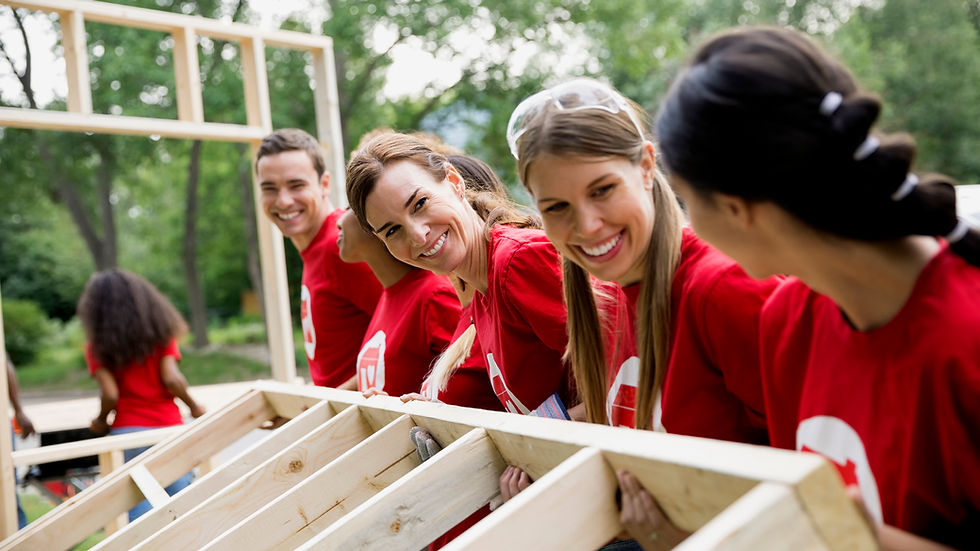
Host fundraising events that feel like moments people want to join
Events work because they turn awareness into an experience. When someone shows up in person, joins a webinar, or takes part in a challenge, they feel connected to your mission in a deeper way. That connection is what drives word-of-mouth.
Fundraising events can be classic, like charity runs, auctions, or community fairs, but the magic is in how you package them. Give the event a clear identity, a reason to participate beyond “raising money”, and a story people can retell.
People don’t share “I attended a fundraiser”. They share “I ran 5K to support families in our town” or “I baked for a cause that matters to me.”
Educational events are powerful too, especially if your mission involves awareness and behaviour change. Workshops, panels, and webinars can position your organisation as a trusted voice, not just a charity asking for support.
And whatever the format, think beyond the day itself. Capture photos, short clips, and mini-interviews so the event keeps working for you long after it ends.
Build relationships with businesses and organisations that already have your audience
Partnerships can speed up awareness because you’re not starting from zero every time. You’re tapping into communities that already exist.
With businesses, cause marketing is one of the cleanest partnership models. A company donates a portion of sales, sponsors a campaign, or matches employee donations. It’s good for them because it boosts brand trust, and it’s good for you because it brings reach, funding, and credibility.
Schools, colleges, and universities can also be incredible partners, especially if your cause connects to education, wellbeing, environment, or community support. A guest talk, a student fundraiser, or a joint project can introduce your mission to future donors and volunteers.
The best partnerships are the ones where the “why” is shared and the benefit is mutual. If your pitch sounds like “what can you do for us?”, it’s a harder sell. If it sounds like “here’s a meaningful way we can do something together that your audience will genuinely care about”, doors open faster.

Write blog posts that educate and build long-term awareness
Blogs are one of the most underrated ways to build awareness because they work while you sleep. A helpful article can rank on Google, get shared on social media, support your email marketing, and give journalists or partners something credible to reference.
The key is to write like a human and structure like a teacher. Pick one topic, explain it clearly, add real examples, and connect the topic back to your mission without forcing it. For example, if your nonprofit focuses on the environment and you’re writing about climate change and marine life, don’t just state the problem.
Show what it looks like in real life. Explain what coral reefs do, why rising sea temperatures disrupt them, and what that means for ecosystems and communities. When people understand the issue, they’re far more likely to care and act.
If you ever get stuck for ideas or want help turning your expertise into search-friendly content, our in-house copywriters can help. Get in touch and we’ll shape a plan that fits your goals and your resources.
Make it easy for people to support you when they’re ready
Awareness is great, but awareness without action is a leaky bucket. Every piece of marketing should gently guide people to a next step, even if it’s small.
That next step might be donating, volunteering, joining your newsletter, attending an event, or simply sharing a post. The point is to meet people where they are. Not everyone is ready to donate today, but many are willing to follow, learn, and stay connected until they are.
A useful mindset is this: you’re not “asking for money”. You’re inviting people to be part of impact.
Conclusion: How to Raise Awareness for Nonprofit Organisations
Raising awareness for nonprofit organisations takes creativity, consistency, and a message that feels real. When you combine storytelling, social media, events, partnerships, and educational content, your mission becomes easier to understand, easier to trust, and easier to support.
Focus on relationships, clarity, and meaningful engagement. Do that well, and awareness turns into momentum.
Do you want to explore marketing for your nonprofit? Please get in touch

